“Each day it becomes easier to know what we ought to despise: what modern man admires and journalism praises.”
- Nicolás Gómez Dávila
Wednesday, November 26, 2014

Monday, November 10, 2014
Laughter and Bad Literature
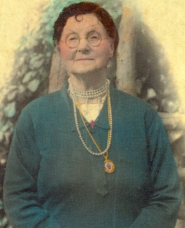
I was introduced to the author through one of my favorite prose stylists, David Bentley Hart, in his article Brilliantly Bad Books. Read the article and then try a little of Irene Iddesleigh, especially if you have some literature lovers to share it with. Laughter is good medicine.
Saturday, October 18, 2014
Consider This New Book on Charlotte Mason and the Classical Tradition

Also, check out the free study guide you can get right now.
Saturday, October 11, 2014
The Awakening of Miss Prim
 Natalia Sanmartin Fenollera turns out to be a kindred spirit to those who homeschool, love literature, believe that small is beautiful, and long for the simple life. Her first novel, The Awakening of Miss Prim, is a virtual apologetic for John Senior's Thousand Good Books approach to education, disguised as a Jane Austen romance, populated with characters who have imbibed the spirit of G.K. Chesterton. If this sounds too good to be true, give it a try - she actually pulls it off.
 Tuesday, September 30, 2014
A Peace to End All Peace
My understanding of the history of what we now refer to as the Middle East was almost non-existent before reading this engaging history of the region from shortly before the Great War up to the current time. The Ottoman Empire, Winston Churchill, The Great Game, The Russian Revolution, John Buchan, Lawrence of Arbia, Making the World Safe for Democracy, and the beginnings of Zionism all come to focus in this mysterious region of the globe. I highly recommended A Peace to End All Peace as a great work of history and relevant to the news of the hour.
Saturday, August 30, 2014
What we learn from art, literature, history, and music
Knowledge includes three
distinct kinds: knowledge that, knowledge how, and knowledge what. I know that uranium
is radioactive; I know how to
ride a bicycle; and I sometimes know what to
do, what to say or what to feel. The first kind of knowledge is information (of
which science is the systematic part); the second is skill; the third virtue.
In reverse order these correspond to the three inputs into a rational life: the
ends, the means and the facts. Knowing what to do, Aristotle suggested, is a
matter of right judgement (orthos logos); but it also involves feeling rightly.
The virtuous person ‘knows how to feel’, and this means feeling what the
situation requires: the right emotion, towards the right object, on the right
occasion and in the right degree. Moral education has just such knowledge as
its goal: it is an education of the emotions. The virtue of the Greek hero is
of a piece with his emotional certainty, and this certainty is the gift of
culture, and of the higher vision which culture makes available. By setting the
individual within the context of the group, by providing him with ritual
expressions and the path to collective release, by uniting him in thought with
the unborn and the dead, and by imbuing his thoughts with ideas of sanctity and
sacrilege, the culture enables the hero to give safe and sincere expression to
the feelings that social life requires. The common culture tells him how and
what to feel, and in doing so raises his life to the ethical plane, where the
thought of judgement inhabits whatever he does.” —from Roger Scruton’s Modern Culture (p.
15)
Thursday, August 14, 2014
Greek Warrior Ethic in a Nutshell
From Alexander Pope's awesome translation of the Iliad:
Ye Greeks, be men! the charge of battle bear;
Your brave associates, and your selves revere!
Let glorious acts your glorious acts inspire,
And catch from breast to breast the noble fire!
On valour's side the odds of combate lie,
The brave live glorious, or lamented die;
The wretch who trembles in the field of fame,
Meets death, and worse than death, eternal shame.
Ye Greeks, be men! the charge of battle bear;
Your brave associates, and your selves revere!
Let glorious acts your glorious acts inspire,
And catch from breast to breast the noble fire!
On valour's side the odds of combate lie,
The brave live glorious, or lamented die;
The wretch who trembles in the field of fame,
Meets death, and worse than death, eternal shame.
Subscribe to:
Posts (Atom)