“One’s first encounter with any of these
epics can be somewhat jarring; they are far and away the most wildly
farraginous and gloriously irresponsible masterpieces in Western literature.
They are at once heroic, comic, allegorical, lyrical, satirical, fabulous, and
(occasionally) dark; they move with alarming ease between the metaphysical and
the ribald, the allegorical and the brutal, the spiritual and the grotesque. The Innamorato might almost seem formless but for the
ingenuity with which Boiardo continually weaves the innumerable strands of his
story together into ever more diverting designs. At any moment in the story, a
paladin might find himself confronted by a giant Saracen astride a galloping
giraffe, or trapped in an enchanted castle oblivious of his own name, or beset
by an army of demons, or challenged by an ogre, or lost in a fairy otherworld
full of the most exquisite enchantments, or at the mercy of a sorcerer. And
Boiardo—even more than Ariosto—is so irrepressibly inventive a fabulist that
one often has the feeling that, but for the author’s mortality, the story need
never come to an end.” — David B. Hart
Quotes
“Education is an atmosphere, a discipline, and a life.” – Charlotte Mason
"To educate man is the art of arts, for he is the most complex and mysterious of all creatures." - Gregory the Theologian
Sunday, July 21, 2013
Orlando Innamorato - A Forgotten Classic
“Neglect of Italian romances robs us of a
whole species of pleasure and narrows our very conception of literature. It is
as if a man left out Homer, or Elizabethan drama, or the novel. For like these,
the romantic epic of Italy is one of the great trophies of the European genius:
a genuine kind, not to be replaced by any other, and illustrated by an
extremely copious and brilliant production. It is one of the successes, the
undisputed achievements.”— C. S. Lewis
Tuesday, July 2, 2013
John Buchan's Huntingtower
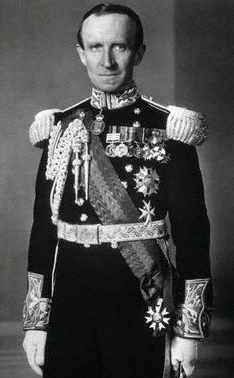
A retired grocer out for gentle walking tour winds up in some serious adventure with a modernist poet and a makeshift troupe of boy-scouts in John Buchan's Huntingtower. This is a fun adventure novel, with a little subtext of Romantic literature and Modernist poetry. I found it fully satisfying and the whole family enjoyed the ride.
Friday, June 28, 2013
Some Perks of a Charlotte Mason Education...
I'm a fan of the Scottish novelist John Buchan (1875-1940), though I had never read his novel Huntingtower. It sounded like a good read-a-loud for the family. We are just two chapters into the book, but my 12 year old and I are amazed at the way our reading experience has been enriched by having done the Ambleside Online curriculum for the last four years or so. The story takes place near the end of World War I and the book's hero is a retired Scottish grocer looking forward to a bit of adventure walking through the Scottish countryside. He is a bit of a literary man with a love of poetry; he even carries Isaac Walton's The Complete Angler with him on his journey which also refers to poems that we have recently read. We feel like we've met a kindred spirit; like we are insiders. We are getting the many references to history, great novels, and poetry that are part of the story. It makes me wonder if he had a Charlotte Mason education himself. Thanks Charlotte Mason and Ambleside Online.
Thursday, June 27, 2013
Modernity is not primarily a historical era
Modernity is not primarily a historical era. It is an
assortment of intellectual assumptions, biases, and tendencies to which humans
have been susceptible from time immemorial. As a disorder, modernity has
profoundly debilitating effects on the person, psychological as well as
physiological effects. In extraordinary cases it may spread to social and
political institutions, breeding decadence on a vast scale. There were isolated
outbreaks of modernity even among the ancients, but it never attained to a
level of an epidemic. As a designation of roughly the last five hundred years
of Western history, the term modernity denotes an era during which every sector
of society has been more or less infected. Today, modernity threatens to become
a pandemic.
The typically modern individual suffers from a variety of
ailments: melancholy; lethargy; malaise accompanied by a hauntingly vague
disorientation; a sense of meaninglessness. In short, nihilism. Many try to
escape their dis-ease by diverting attention away from their troubled minds
through various bodily indulgences. The most popular of these diversions are of
course alcohol and drug abuse, sexual promiscuity, obsessive attachment to
popular culture, extreme athletic exertions. Anything that inhibits thought.
The typical modern society condones and even promotes these activities, in part
because the markets upon which such societies depend profit from the products
and services associated with them; also because these societies lack the
spiritual resources to recognize them as pernicious. (from PURE by Mark Anderson)
Sunday, June 23, 2013
What is Poetry?
When Boswell asked Johnson to define poetry, the latter replied:
Why, sir, it is much easier to say what it is not. We all know what light is; but it is not easy to tell what it is.
Johnson's observation points to an aspect about poetry that we wish to emphasize: poetry encompasses a particular kind of sensibility rather than a particular kind of form. Thus, with regard to its form, one can think of examples of verse that are not poetic, and of prose that are. Both are potential vehicles of Truth and meaning, while their forms of expression will not necessarily determine their nature.
There are no absolute distinctions between poetry and prose, for they are both, so far as they are intelligible, linguistic vehicles of the Truth. The specific aspect of words written or spoken - verse of prose - is an accidental feature; the essential distinction concerns words in whatever pattern or arrangement as manifestations of Truth.
While the form of the poem may vary, the distinguishing feature of the poetic sensibility lies in its orientation and receptivity to the Truth. It is to perceive Truth as Presence.
--------------------------
"Milton says, that the lyric poet may drink wine and live generously, but the epic poet, he who shall sing of the gods, and their descent unto men, must drink water out of a wooden bowl. For poetry is not 'Devil's wine,' but God's wine."
From The Timeless Relevance of Traditional Wisdom by M. Ali Lakhani
Friday, June 21, 2013
Higher Education Today...
"Higher education today has little or nothing to do with understanding and appreciating the soul and the world; it all too often amounts to a certificate to an employer that the bearer has been both thoroughly vaccinated against all childishly idealistic desires and also reliably infected with all of the insatiable desires appropriate to adult workaholics. Furthermore, the best and the brightest, the "kalos kagathos" of our day, learn what they want to hear: that greed is good, and that private vices are the very public virtues that keep the economy strong and productive." - Socrates in the Underworld: On Plato's Gorgias by Nalin Ranasinghe
Wednesday, May 29, 2013
The good teacher...
The good teacher is a man or woman of exceptionally wide and lively intellectual interests. It is useless to think of teaching as a business, like banking or insurance: to learn the necessary quota of rules and facts, to apply them day by day as the bank-manager applies his, to go home in the evening and sink into a routine of local gossip and middle-brow relaxation (radio, TV, the newspaper, and the detective-story), to pride oneself on being an average citizen, indistinguishable from the dentist and the superintendent of the gas-works -- and then to hope to stimulate young and active minds. Teachers in schools and colleges must see more, think more, and understand more than the average man and woman of the society in which they live. This does not only mean that have a better command of language and know special subjects, such as Spanish literature and marine biology, which are closed to others. It means they must know more about the world, have wider interests, keep a more active enthusiasm for the problems of the mind and the inexhaustible pleasures of art, have a keener taste even for some of the superficial enjoyments of life -- yes, and spend the whole of their career widening the horizons of their spirit. Most people, as we see, stop growing between thirty and forty. They "settle down" -- a phrase which implies stagnation -- or at the utmost they "coast along," using their acquired momentum, applying no more energy, and gradually slowing down to a stop. No teacher should dream of doing this. His job is understanding a large and important area of the world's activity and achievement and making it viable for the young. He should expect to understand more and more of its as his years go by.
Gilbert Highet, The Art of Teaching, pp. 48-49
Subscribe to:
Posts (Atom)